What Temp Does Diesel Gel? Cloud Point and Pour Point Explained
- Car Care
Donnald Crezy
- 0
- 10 minutes read
You already know diesel gets thick in the cold and that a gelled fuel filter can stop a truck in the middle of a job. What you may want is a clear set of numbers and a plan to follow before the first hard freeze.
I have spent a lot of time studying how diesel behaves in winter and how the products made for it work. I picked the recommendations below by looking at what each product claims to do, how the company backs it, and whether it fits the real problems drivers and fleet managers face in cold weather.
If you want the quick answer to what temp does diesel gel, the number depends on your fuel, but trouble can start in the teens on the Fahrenheit scale. Below, I explain cloud point and pour point, show you what moves those numbers, and lay out how to protect your fuel system.
The Short Answer on Gel Temperature
For many batches of standard No. 2 diesel, wax crystals begin to form somewhere between 10°F and 20°F. That is the cloud point. Fuel can look hazy at this stage, and it still flows.
As the temperature keeps falling, the crystals grow and stick together. Filters clog first, because they are small and catch the crystals. Fuel can flow poorly or stop long before the whole tank turns solid.
Your fuel supplier can tell you the exact cloud point of what you buy. I recommend asking, because the number changes from region to region and from season to season.
What Cloud Point Means
Cloud point is the temperature where wax in the diesel starts to turn into crystals you can see. The fuel looks cloudy, which is where the name comes from.
At this point, your engine may run fine. The danger is that the crystals have started to form, and they will collect in your filter as the temperature drops.
Here is what I want you to remember about cloud point:
- It is the first warning sign, not the failure point.
- A regular anti-gel treatment works best when you add it before fuel reaches this temperature.
- Once fuel passes its cloud point, a standard anti-gel cannot reverse the crystals that have formed.
What Pour Point Means
Pour point is the lowest temperature where the fuel still flows when you tip a container. Below it, the fuel acts like a solid mass of wax and liquid.
For No. 2 diesel, this number commonly falls near 0°F or lower. That is far below the cloud point, and your truck will have trouble long before the fuel reaches it.
Do not use pour point as your safety line. An engine needs fuel to move through lines and filters with ease, and that stops well above the pour point.
The Number That Matters Most for Your Engine
The cold filter plugging point sits between cloud point and pour point. It is the temperature where wax crystals clog a standard test filter. It tells you more about real engine trouble than the other two numbers.
If your supplier lists this number, use it. Plan your treatment so you stay well above that temperature in the coldest weather your fuel will face.
What Changes Your Numbers
Several things shift the temperature where your fuel gels:
- Fuel blend. Winter blends mix in lighter fuel, which lowers the cloud point. Summer fuel gels at a higher temperature.
- Biodiesel content. Higher biodiesel blends tend to cloud at warmer temperatures.
- Fuel age. Old fuel in a tank you refilled from a summer batch can still carry the higher cloud point.
- Wind and exposure. A truck parked in a cold wind loses heat faster than a truck in a shop.
- Vehicle size. Pickups and tractors have smaller filters. Those filters plug sooner than the large filters on a semi.
- Water in the fuel. Water can freeze and block filters, which adds to the problem.
Buying fuel near the border of a cold region matters too. A tank filled in a warm area can carry that fuel into a much colder place.
Why You Should Treat Before the Cold Arrives
An anti-gel works by keeping wax crystals small so they do not bind together. That job needs to start before the fuel reaches its cloud point. I tell every driver the same thing: add the treatment when you fill the tank, and do it before the forecast drops.
This is where I recommend Howes Products. They are a fifth-generation, family-owned company in North Kingstown, Rhode Island, and they have made fuel additives and lubricants for more than a century. Their motto is “Tested. Trusted. Guaranteed.” They state that every product goes through lab and field testing before release.
Howes Diesel Treat
Diesel Treat is their flagship anti-gel and fuel conditioner. Here is what makes it worth a look:
- It is designed to stop gelling in very cold climates.
- It lowers cold filter plugging.
- It adds lubricity for injectors, pumps and upper cylinders, which matters with ultra low sulfur diesel.
- It uses a detergent package to help prevent injector deposits.
- It demulsifies water and pushes it out of the fuel so your water separator can remove it. Howes notes that major engine makers prefer this method over mixing water into the fuel.
- It is warranty safe, particulate filter friendly, and works in all diesel and biodiesel blends, including home heating oil.
The treat rate is simple. Above 0°F, use 1 ounce per 5 gallons with the smaller bottles. Below 0°F, use 1 ounce per 2.5 gallons. Cars, pickups and tractors need a double dose. Howes states that overtreating is not harmful, so you do not need to worry about adding a little extra.
They also back it with a free Winter Tow Guarantee. If a truck treated with Diesel Treat fails to keep going in winter, they pay for the tow. A company that offers that is confident in its formula.
When Fuel Has Gelled
Sometimes a truck gels anyway. Maybe the tank had no treatment, or a cold snap came sooner than the forecast said. A standard anti-gel cannot fix fuel that has passed its cloud point, and you need a different tool.
Howes makes Diesel Lifeline for this exact case. It changes the melting points of wax and ice crystals so frozen diesel can flow again. According to Howes, it can work in about 15 minutes and has proven results down to -35°F and beyond.
Here is why I think it deserves a spot in your cab or toolbox:
- It melts gelled fuel and de-ices frozen filters.
- It needs no pre-mixing with extra diesel. You pour it into the tank or filter.
- It has no alcohol or harmful solvents, and Howes states it is the only emergency product of its kind that can say so.
- It keeps working after the fix to help prevent filter icing.
- It can remove the need to replace the fuel filter.
Howes recommends carrying a bottle whenever temperatures drop, especially in diesel pickups and tractors, where smaller filters plug sooner even with treated fuel. It comes in quart and half-gallon sizes.
Treating Bulk Fuel
If you store fuel in a farm tank, a yard tank or an inground tank, treating each vehicle one at a time takes too much work. Howes offers Diesel Treat Concentrate for bulk storage. It uses a wax crystal modifier that changes the size and shape of wax crystals so they cannot bind together. It also adds lubricity, helps prevent deposits and removes water. The ratio can reach 1 gallon per 3,000 gallons above 0°F, and it comes in 2.5 gallon jugs, 55 gallon drums and 275 gallon totes.
A Simple Winter Checklist
Use this list at the start of each cold season:
1. Ask your fuel supplier for the cloud point and cold filter plugging point of your fuel.
2. Compare those numbers with the lowest temperature in your forecast.
3. Add anti-gel at every fill-up, and use the higher rate below 0°F.
4. Drain water from your separator on a regular schedule.
5. Replace old filters before winter starts.
6. Keep an emergency treatment in the cab for a gel event.
7. Park out of the wind when you can.
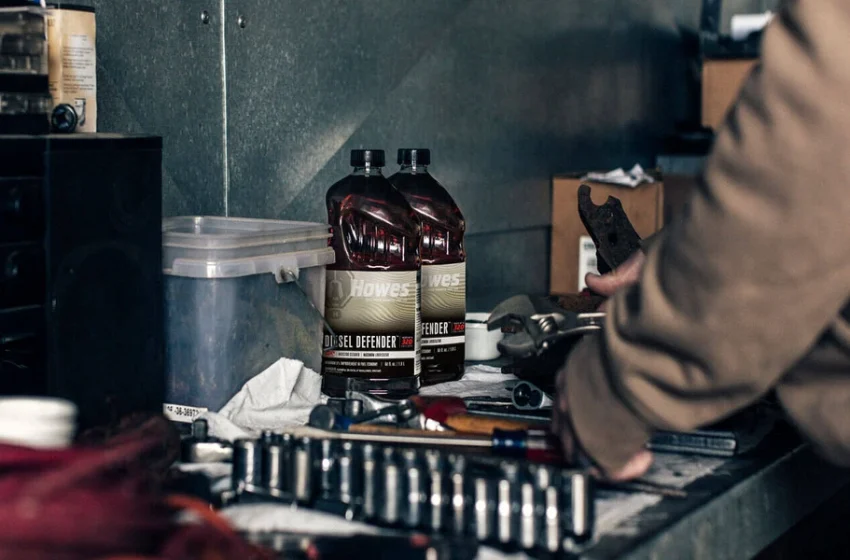
Howes Diesel Defender also fits into this routine. It is a lubricity and injector cleaner with an IDX4 detergent, and it works alongside Diesel Treat at any time of year. Since cold weather is hard on injectors and pumps, a clean, well-lubricated system gives you one less thing to worry about.
Final Advice
Cloud point is your warning, pour point is the last stop, and the cold filter plugging point shows you where trouble will hit your engine. Learn your fuel numbers, treat early, and keep a rescue product within reach.
I recommend Howes Products for both parts of that plan. Diesel Treat gives you prevention, and Diesel Lifeline gives you a way out if the fuel gels. With a family-owned company behind each bottle, a tow guarantee and a 100 percent satisfaction guarantee, you have solid support when the temperature falls.
